
Abstract
This is an accepted article with a DOI pre-assigned that is not yet published.
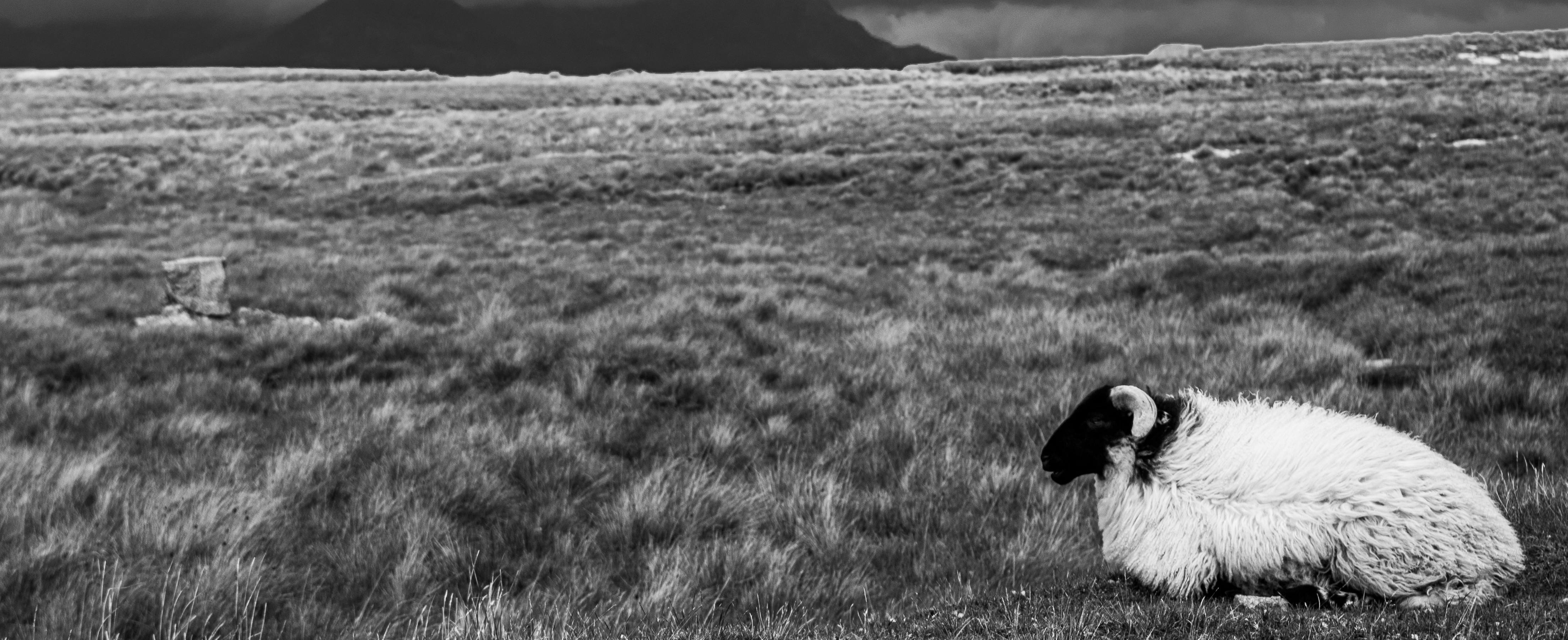
My partner and I have a micro-sanctuary in the Blue Mountains of New South Wales. We live with four sheep, all rescued from the processes of industrial farming. This essay – a kind of double portrait, of the sheep we call Henry and Orpheus – concerns the manner in which the space of sanctuary, while we might wish or conceive it to be a place of happiness after the trauma from which a particular non-human has been rescued, can become – indeed almost has to be – a locus for the emergence of sorrow and a window on the haunted consciousness of a compromised specieshood. We have only the faintest notion of the past of Henry, a ram (now wether), and it took almost five years for him to feel he could at last bring his sorrow to us. There has been a deepening and flowering of the relationship as a consequence. Orpheus, on the other hand, came to us as a five-day-old orphan; we hand-raised him, initially in our own human spaces, and in some ways his psyche has been haunted, divided, ever since. It is only the fact that we live, day by day, on such close quarters with these companions that we have been able, on the one hand, to track – learn to see – the emergence of this sorrow and, on the other, to begin to read the signs of a divided, human-inflected consciousness (attended by its own particular mode of sorrow/alienation). I have attempted to describe and, to some cautious extent, analyse these processes.
Keywords: attachment, culture, emergence, forgiveness, grief, sanctuary, sheepness, subjection